
Look up a restaurant's inspection record
Start typing a restaurant, city, or zip code. Covers every licensed restaurant in Florida.
Source: Florida DBPR public inspection records.
Saved places
Saved on this device. Scores refresh from the latest inspection data when you open this list.
Keep your saved places
Sign up to keep your saved places and get updates. Right now saves live on this phone or computer. Signing up keeps a copy of your list with us, ready for when saving across devices arrives.
Why people use CleanNibble
Real inspections
Straight from official government inspection records in Florida, New York, and Los Angeles County, not online reviews.
Easy scores
A simple 0-100 CleanNibble Score plus the inspectors' actual violation counts, so you can decide in seconds.
Always growing
Started with Florida, then New York, now Los Angeles County too. More areas are being added so coverage keeps expanding.
Know someone who eats out in Florida, New York, or Los Angeles? Send them CleanNibble.
Contact
Questions, feedback, or data corrections? Send us a message and we will get back to you within 2-3 business days. You can also email nibble@cleannibble.com.
The CleanNibble Score is CleanNibble's summary of official public inspection records. It is not an official grade, rating, or endorsement, and it is not our opinion of any business. Every place starts at 100. We subtract 6 points for each high priority violation the inspector recorded, 3 for each intermediate violation, and 1 for each basic violation. If the health department closed the place at that inspection, the score is capped at 40. Letters are just score ranges: A is 90 and up, B is 80-89, C is 70-79, D is 60-69, F is below 60.
Each inspection is a snapshot of conditions at the time of the visit. On any given day, a place may have more or fewer violations than its most recent inspection shows, and one inspection may not reflect long-term conditions. Each listing shows the date of its inspection, and the data-through date for each source is shown below and on our Disclaimer and Data Sources page. Always check the official lookup for the latest details: Florida, New York City, New York State, or Los Angeles County.
Florida does not grade restaurants. State inspectors record violations in three tiers: high priority, intermediate, and basic. The CleanNibble Score is our own summary of those counts from each place's most recent full state inspection. It is not an official grade.
Every place starts at 100. We subtract 6 points for each high priority violation, 3 for each intermediate violation, and 1 for each basic violation. If the state ordered an emergency closure at that inspection, the score is capped at 40.
Florida data source: Florida Department of Business and Professional Regulation (DBPR), Division of Hotels and Restaurants public records, updated weekly.
New York inspectors record two kinds of violations: critical (the category New York's inspection rules link most closely to foodborne illness) and non-critical (general sanitation, maintenance, and facility items). For the CleanNibble Score we count each critical violation like a Florida high priority violation (6 points) and each non-critical violation like a basic violation (1 point). New York has no intermediate tier. In New York City, a Health Department closure at that inspection caps the score at 40.
New York City also gives restaurants an official letter grade (A is 0-13 inspection points, B is 14-27, C is 28 or more, and "Grade Pending" while a grade is being decided). When a place has one, we show it separately as the Official NYC grade, next to its date. It is the city's grade, not ours, and it can differ from the CleanNibble Score because the city uses its own point system and grades can lag the latest inspection.
New York State data covers restaurants inspected by the State Department of Health and the county health departments that report to it. Erie County (Buffalo) and Suffolk County run their own programs and are not included yet.
New York data sources: New York State Department of Health food service establishment inspections and NYC Department of Health and Mental Hygiene restaurant inspection results, both on official open data portals, updated weekly. NYC neighborhood names from NYC Department of City Planning.
LA County inspectors start each restaurant and market at 100 and take off points for each violation: 4 points (or 11 for what the county classifies as an imminent health hazard, such as vermin or sewage) for major risks, 2 points for minor risks, and 1 point for general upkeep. For the CleanNibble Score we count each 4 or 11 point violation like a Florida high priority violation (6 points), each 2 point violation like an intermediate one (3 points), and each 1 point violation like a basic one (1 point). The county's "multiple major violations" add-on is not counted twice. If the county suspended the health permit at that inspection (a closure), the score is capped at 40.
LA County also gives each place an official letter grade (A is 90-100, B is 80-89, C is 70-79, and below 70 the county posts a score card instead of a letter). We show it separately as the Official LA County grade, with the county's own score. It is the county's grade, not ours, and it can differ from the CleanNibble Score because the county uses its own point system.
LA County publishes its inspection data every three months, so the newest inspections can be a few weeks behind. Pasadena, Long Beach, and Vernon run their own health departments and are not in the county's data. Places whose permit is no longer active are left out.
Los Angeles County data source: County of Los Angeles Department of Public Health, Environmental Health restaurant and market inspections and violations, on the county's open data portal, updated quarterly.
Florida, New York State, and LA County records do not list cuisine, so cuisine tags are approximate. In New York City we use the cuisine the Health Department has on file. We match each place to OpenStreetMap listings by name and location, and when there is no match we guess from words in the business name (for example "Pizzeria" or "Sushi"). Some places have no cuisine tag. They still show in normal searches, but not when a cuisine is picked. Tags can be wrong, so treat them as a guide.
Cuisine data © OpenStreetMap contributors, available under the Open Database License.
Every restaurant starts with a CleanNibble Score of 100, based on its most recent full inspection by the state or local health department. We then subtract points for each violation the inspector recorded:
- High priority (critical) violation: minus 6 points. These are the categories regulators treat as highest risk, for example food held outside the required temperature range or evidence of pests that the inspector recorded.
- Intermediate violation: minus 3 points.
- Basic (non-critical) violation: minus 1 point, for things like general upkeep.
- If the restaurant was closed by the health department at that inspection, the score is capped at 40.
The score then becomes a letter and a thumb. These are only pictures of the score range, not a judgment about the business:
 A, 90 to 10010 or fewer points subtracted
 B, 80 to 8911 to 20 points subtracted
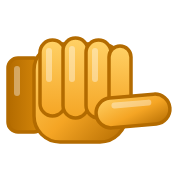 C, 70 to 7921 to 30 points subtracted
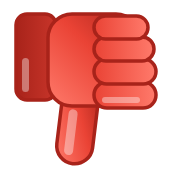 D, 60 to 6931 to 40 points subtracted
F, below 60More than 40 points subtracted
Tap the thumb on any result to see exactly how its score was worked out. New York records list critical and non-critical violations only, so there is no intermediate tier there.
No. The CleanNibble Score is CleanNibble's summary of the official public inspection record, calculated by a formula, so you can compare records at a glance. It is not an official grade or an endorsement. Florida does not issue official restaurant grades. Where a government does issue one, like New York City's letter grades, we show it separately in its own badge labeled as the official grade. The two can differ, because an official grade may come from an older inspection.
It tells you what the inspector recorded on one visit, on the date shown, and nothing more. Many violations are corrected on the spot or at a follow-up visit, and conditions can change after any inspection. Tap the thumb to see the details, including whether a recheck happened. The record shows whether the agency ordered a closure at that inspection and whether a recheck is on file. CleanNibble does not tell you whether to eat anywhere; that is your decision, and the official record linked on each listing is the source to check.
Our scores are calculated from the official inspection record, so if the record itself is wrong, please contact the agency that inspected you. If you think we matched, labeled, or displayed something wrongly, tap Report a correction on the listing, use the contact form, or email nibble@cleannibble.com, and we will look into it, usually within 2 to 3 business days. Your score updates automatically after your next inspection.
No. Every restaurant and food business listed is independent. CleanNibble does not own, run, inspect, or endorse any of them, and is not responsible for their food, allergens, service, prices, or anything that happens when you visit. Inspection results are a snapshot of one visit and conditions can change afterward. Links to Yelp, OpenTable, Google Maps, booking sites, and restaurant websites go to other companies we do not control, and CleanNibble is not affiliated with them or with any government agency. See our Terms of Use and Disclaimer and Data Sources for the full details.
All inspection results come from public records published by government agencies: the Florida Department of Business and Professional Regulation (Division of Hotels and Restaurants), the New York State Department of Health, the New York City Department of Health and Mental Hygiene, and the Los Angeles County Department of Public Health. Cuisine tags come from OpenStreetMap and restaurant names, so they are approximate.
We refresh Florida and New York data every week, usually on Saturday mornings, as soon as the agencies post new inspections. Los Angeles County publishes its inspection data every three months, so the newest inspections there can be a few weeks behind. The date the data runs through is shown when you open each area on this page.
Right now, Florida, New York, and Los Angeles County. In New York, Erie County (Buffalo) and Suffolk County run their own inspections and do not share them with the state, so they are not included yet. In Los Angeles County, Pasadena, Long Beach, and Vernon run their own health departments and are not in the county's data. More areas are on the way.
Try just the restaurant's name without the city, or search by zip code. Some places are registered under a different city name or their legal business name, which can differ from the sign out front. Brand new restaurants may not have had an inspection yet. Places like grocery stores and food trucks may be licensed by a different agency and not appear.
When you tap Near me, your phone or browser asks for permission to share your location, and results are sorted by distance. Your location stays on your device and is not stored by CleanNibble.
Tap Save on any result to add it to your Saved list at the top of the page. Saves are kept on your device. To keep them on every device and the CleanNibble app, sign in with your email. There is no password, just a one-time code we email you.
Yes. Sign in, save the places you care about, and we check them every time the inspection data is refreshed. When one gets a new inspection, or its score or thumb changes, we send you an email showing the old and new result with a link to the full report. In the iPhone app you can also get a push alert. Turn either one on or off under Account, Inspection alerts. Every alert email also has a one-tap unsubscribe link.
Yes, searching, saving, and sharing are free. We do not sell your personal information. See our privacy page for details.
Use the contact form on this page, the Contact page in the app, or email nibble@cleannibble.com.